RecoveryTherm Cube Review: Contrast Therapy Device for Localized Pain
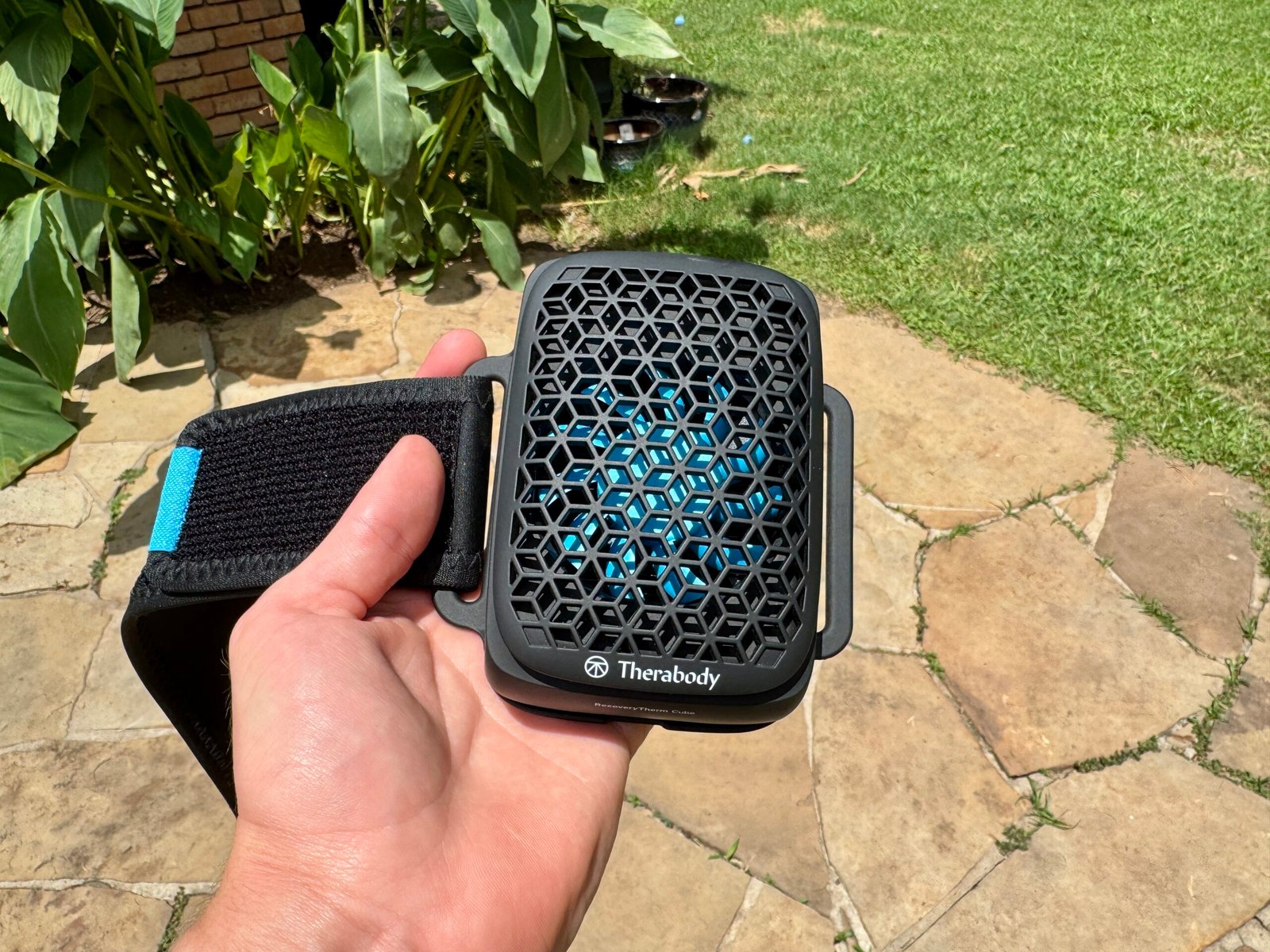
The RecoveryTherm Cube by Therabody is one of the coolest recovery tools I’ve used. It’s a portable contrast therapy device that automatically cycles through heat and cold to treat minor aches and pains.
After about a year and a half of owning it, I can tell you exactly what it’s good for, what it’s not, and whether it’s worth the price tag.
What is it?
It’s a wearable contrast therapy device made by Therabody, the same company behind the popular Theragun line. It’s a small, flat, cube-shaped unit that attaches to your body using two included straps.
It generates both heat and cold and you can run them together in an automatic alternating cycle or use each one on its own.
Contrast therapy works by alternating between heat and cold to drive blood in and out of a treatment area. The heat increases blood flow; the cold restricts it. That back-and-forth pumping effect is what reduces pain and speeds up recovery.
The RecoveryTherm Cube brings that process to a single small device you can strap directly onto your body.
Why I got it
At the time I got it, I had chronic lower back pain. I had already tried cold plunges and saunas and I was curious whether there was a device that could provide localized contrast therapy. A few things made me think it would work:
- Therabody makes quality products
- The idea of one device handling both heat and cold automatically was appealing
- It seemed more convenient than two separate tools
- The USB-C charging and portable design made it easy to use
Setup
Setup is as simple as it gets. Charge it with a USB-C cable, attach the strap that fits your target area, and turn it on. There’s nothing complicated.
It comes with two straps:
- A larger strap designed to wrap around your torso, useful for your back, side, chest, or shoulder
- A smaller strap that works well around limbs like your calf, thigh, or bicep
Both straps are soft and use velcro, so they’re comfortable against skin and easy to adjust.
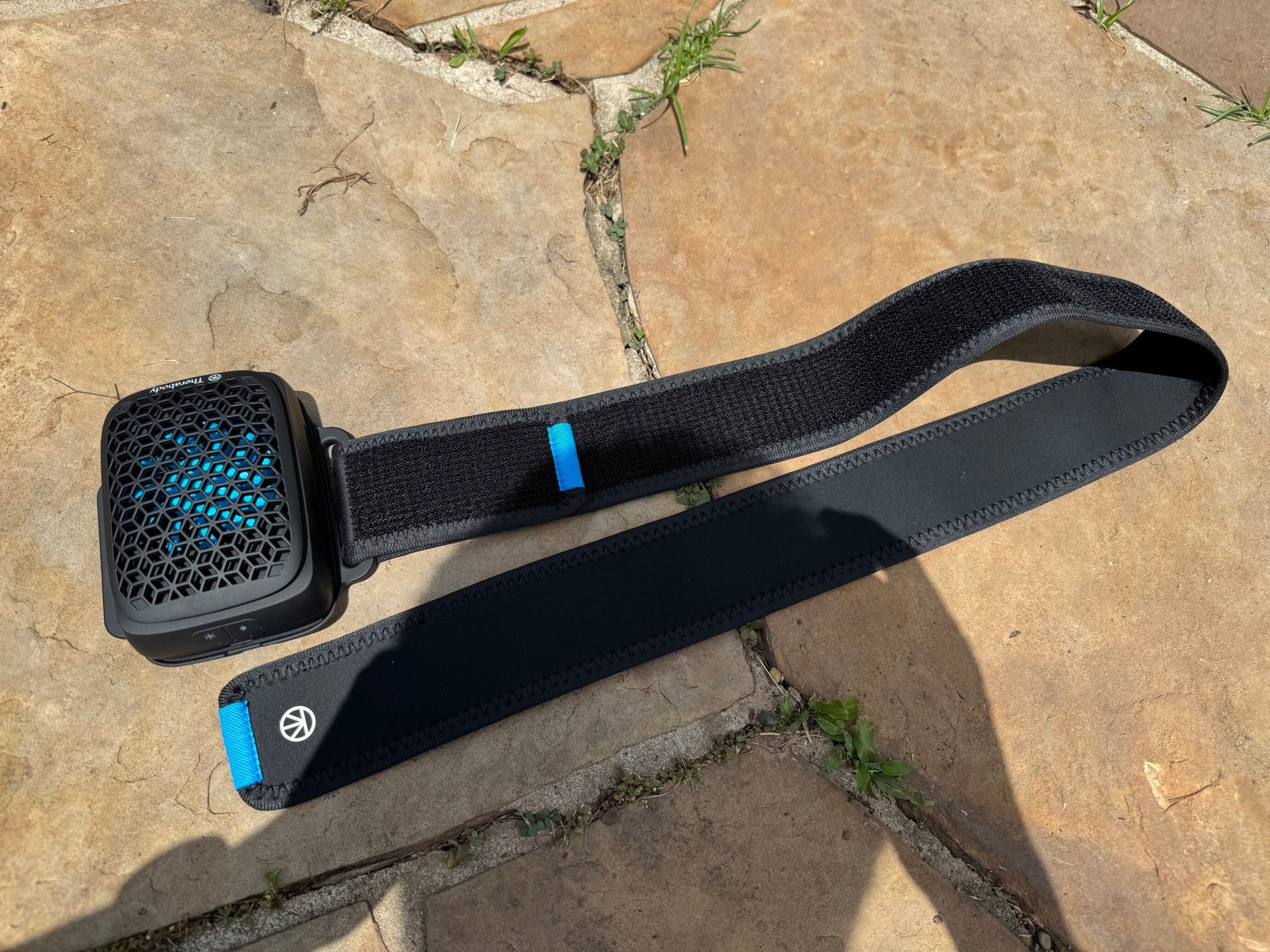
My first impression was good quality like all therabody products I’ve used. It’s small and feels high-quality. The cube itself detaches from the housing, which is great on areas like my neck and shoulder.
Contrast Cycle and Temperature
The auto-cycle mode runs two complete rounds of heat and cold in about 15 minutes. You turn it on and let it run. You can also run just heat or just cold independently if that’s all you need.
It cools down to 46°F, which lands right in the range that research suggests is optimal for contrast therapy.
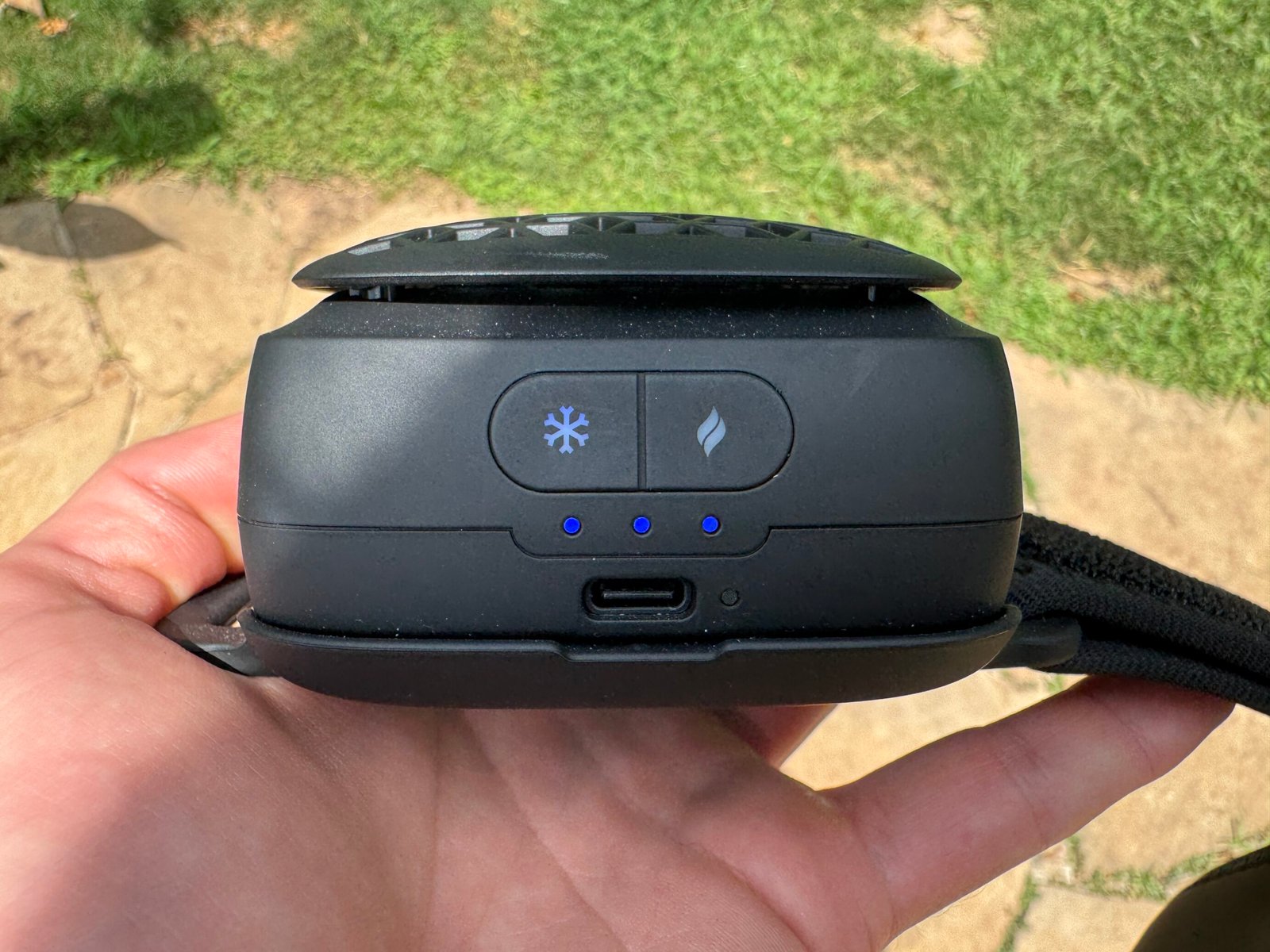
Studies recommend using the highest heat and lowest cold temperatures possible and keeping them consistent throughout each session. The reasoning is that extreme temperatures drive the pumping effect — alternating between restricting and increasing blood flow — which is what makes contrast therapy actually work.
Because it uses pre-set temperatures, it’s safer and more consistent than trying to do the same thing on your own with a heating pad and an ice pack.
Intensity Levels
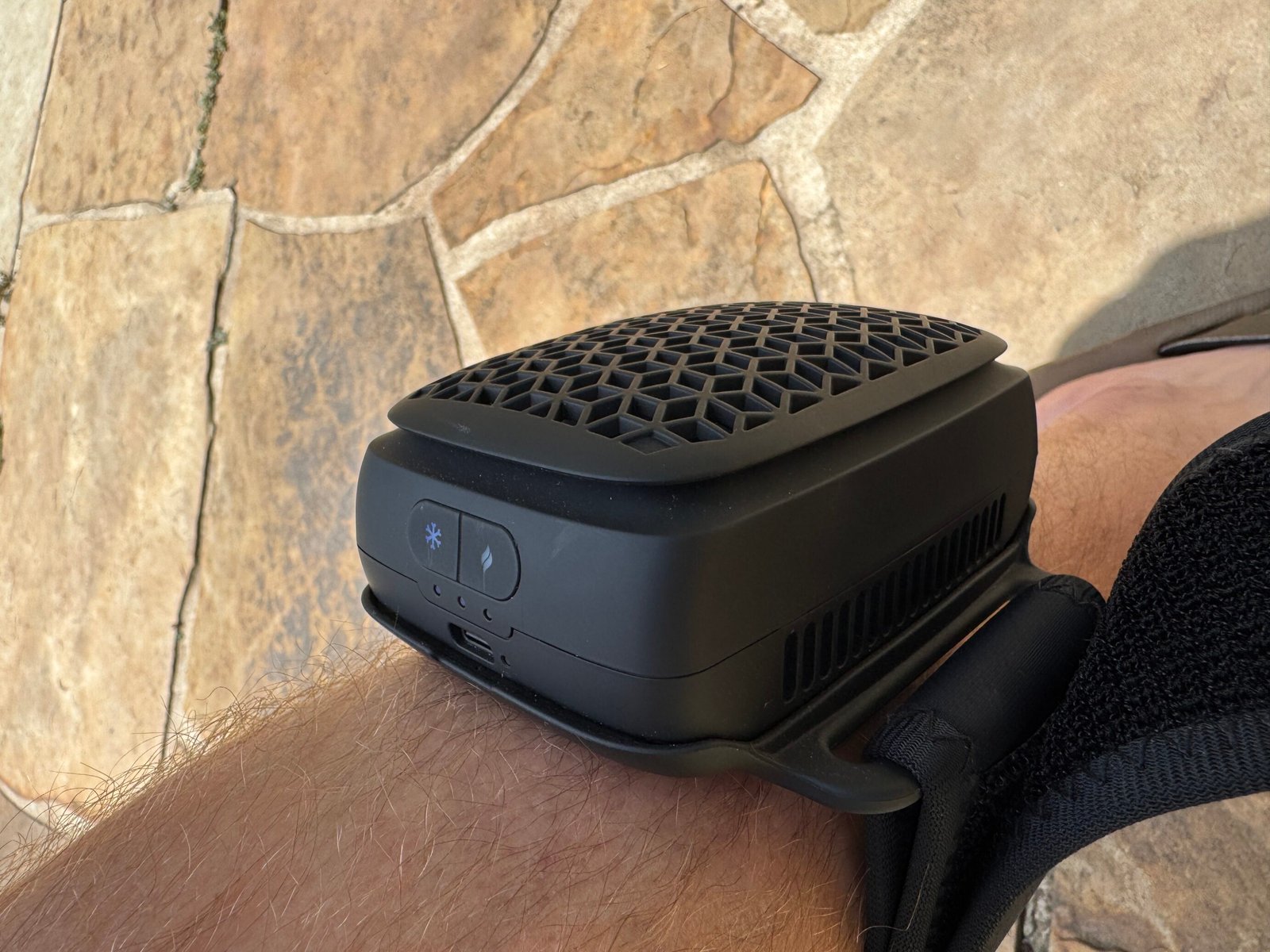
There are three intensity levels for both heat and cold. Switching between them is easy. Just hold the heat or cold button until it changes.
I always use the highest setting and I’m not sure the lower levels offer much practical value, but they’re there if you’re more sensitive to temperature.
Detachable Cube
The cube detaches from the strap housing, which is more useful than it sounds. For areas like your neck, shoulder, or chest that are hard to strap properly, you can just hold the device in place by hand.
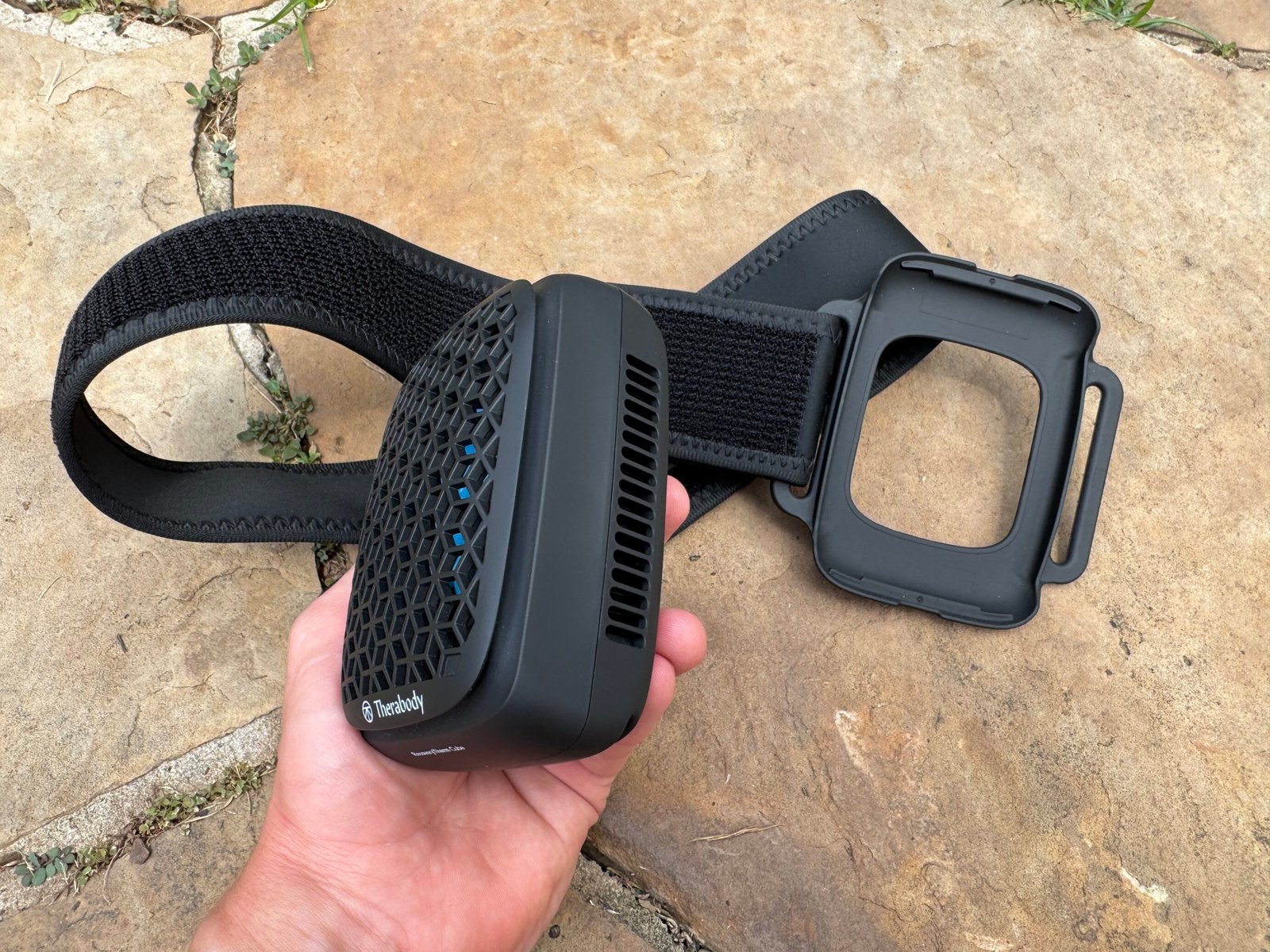
Without this feature, those areas would be difficult or awkward to treat.
Battery Life and Charging
You get about 120 minutes when running heat or cold on its own and about 60 minutes in contrast mode. Since each full contrast session is 15 minutes, that’s four complete sessions on a single charge. More than enough for daily use.
Size and Weight
The device weighs less than a pound, so it’s comfortable to wear during a session and easy to travel with.
Strapping It On
For my lower back, the large strap wraps around my torso and holds the cube in place. For my bicep or calf, the smaller strap works well.
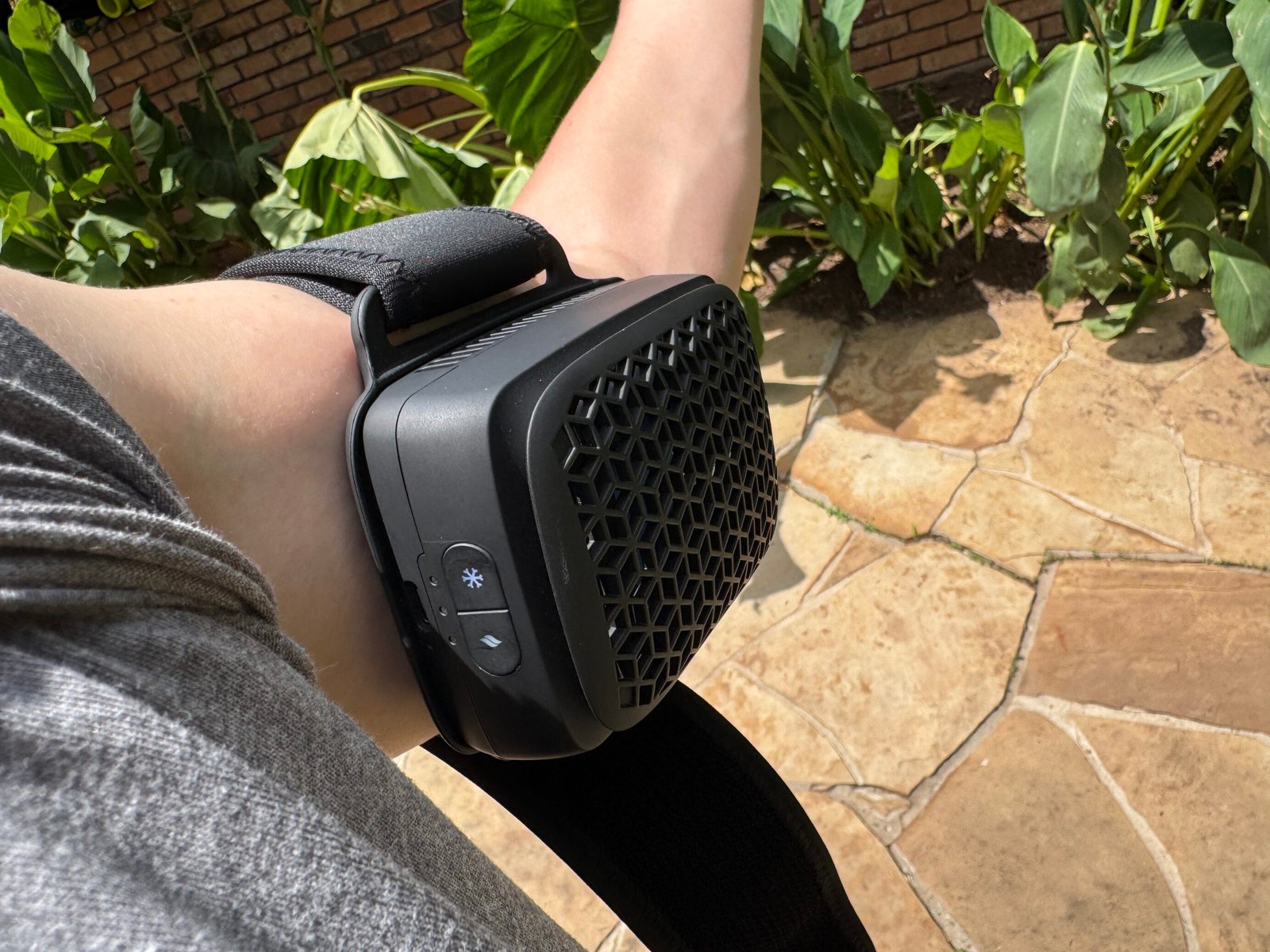
For my neck and shoulder, I just detach the cube and hold it. It only takes a few seconds to set up, and once it’s on you don’t have to touch it again until the session ends.
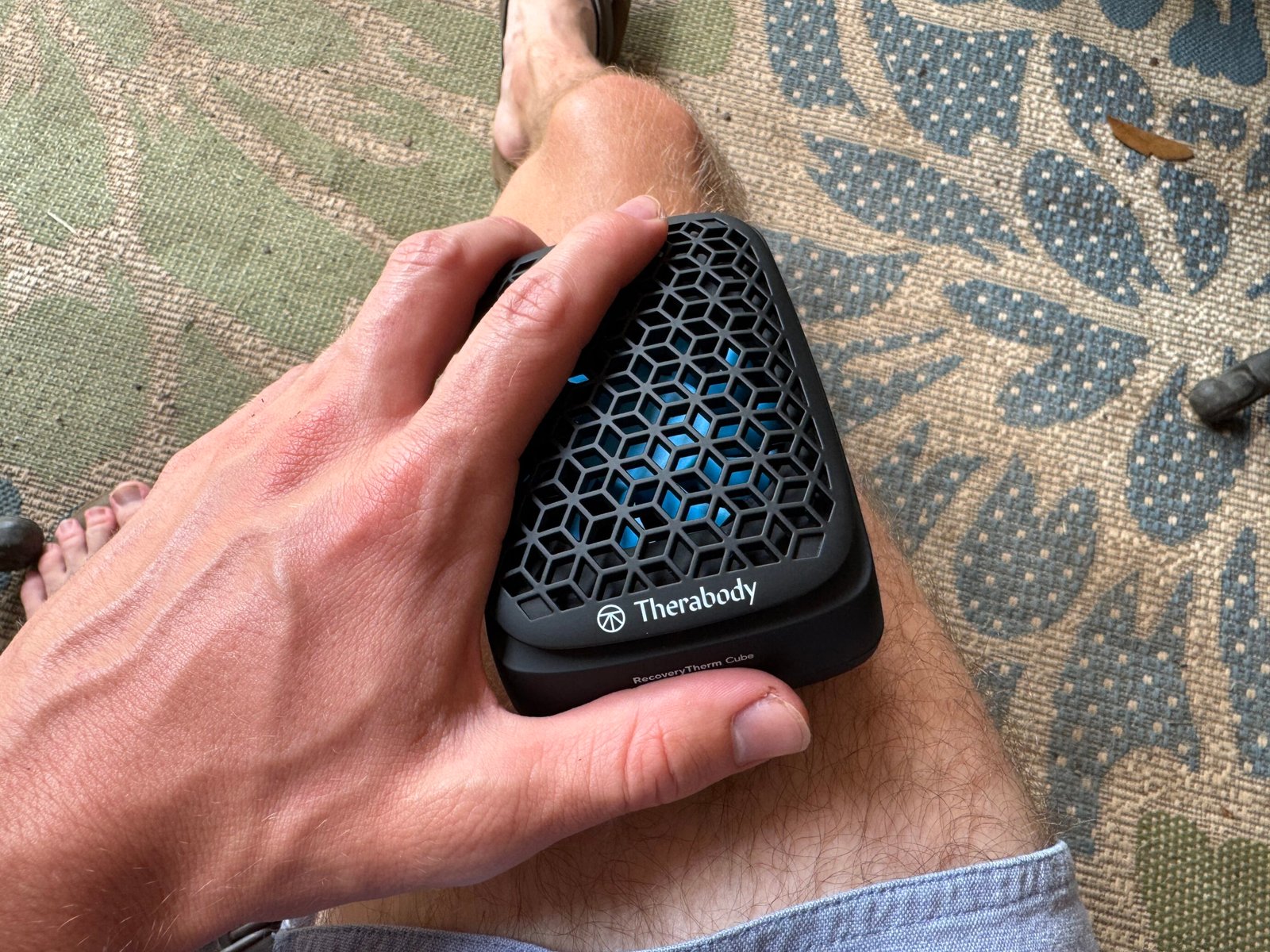
During a Session
You’ll feel the heat and cold cycle clearly. Both are intense. After a session, the treated area will have a temporary red mark from the temperature change. It fades on its own in a few minutes and isn’t something to worry about.
The fan runs throughout the session. It’s not loud, but you can hear it in a quiet room.
Results
It works well for localized pain. If I wake up with lower back pain, one 15-minute session tends to flush the pain out almost completely. I’ve had the same experience with a tight bicep or sore calf. The contrast cycle does what it’s supposed to do in those areas.
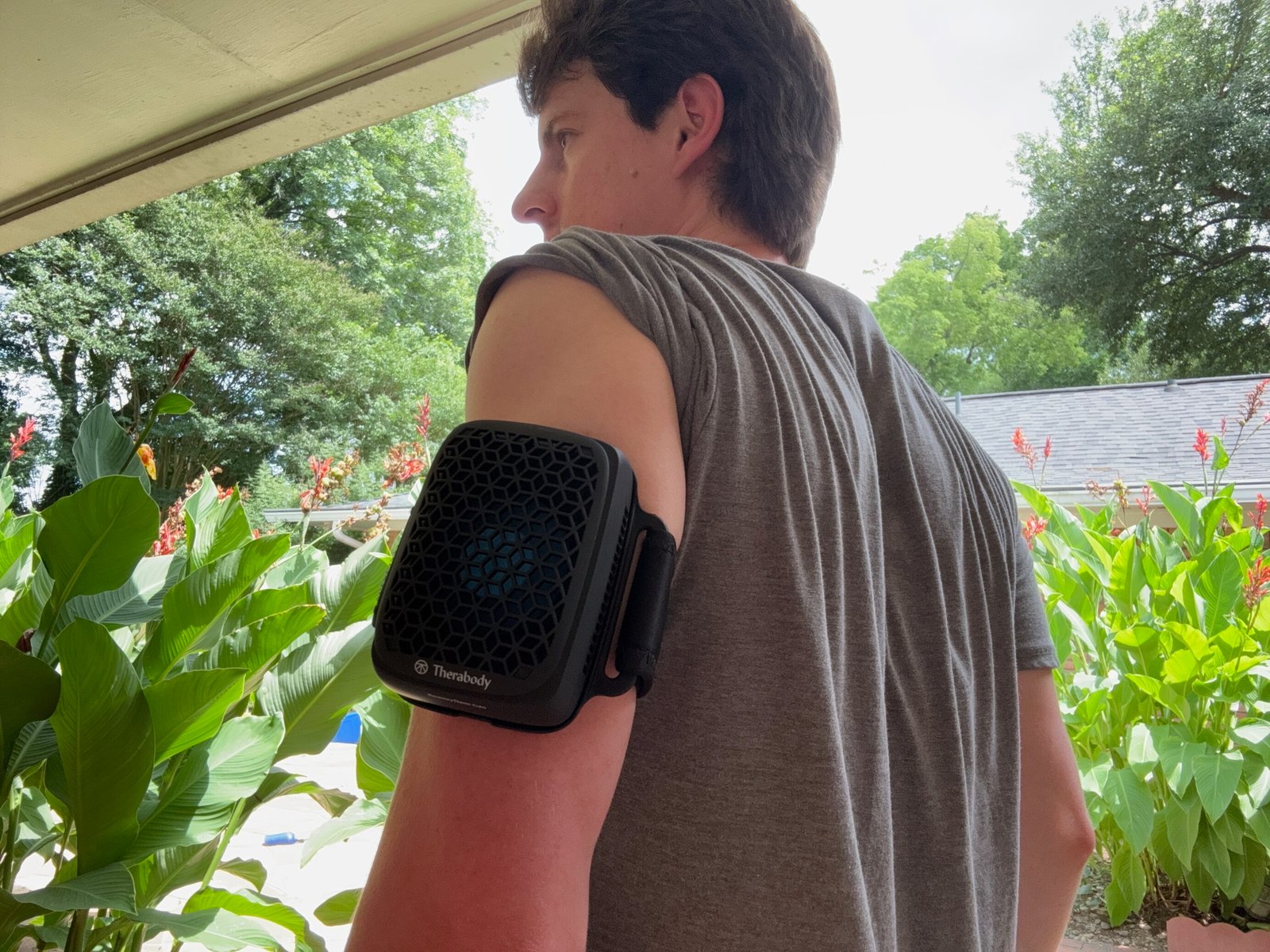
The limitation is the coverage area. The surface of the device is small and flat, which means you’re treating a specific spot on a relatively flat part of your body. It works well for that. It doesn’t work well for anything else.
Considerations and Drawbacks
Not everything about the RecoveryTherm Cube works in its favor. Here’s an honest look at the downsides.
It’s Flat
This is the biggest limitation. Joints are curved, not flat. That means you can’t use it well on a knee, elbow, or ankle which are some of the most common areas people need to treat.
It’s built for flat muscle surfaces, not joints.
Small Coverage Area
Even on flat muscles, the coverage area is small. It works well for a targeted spot on your lower back or a specific point on your calf, but it can’t treat a full muscle group at once.
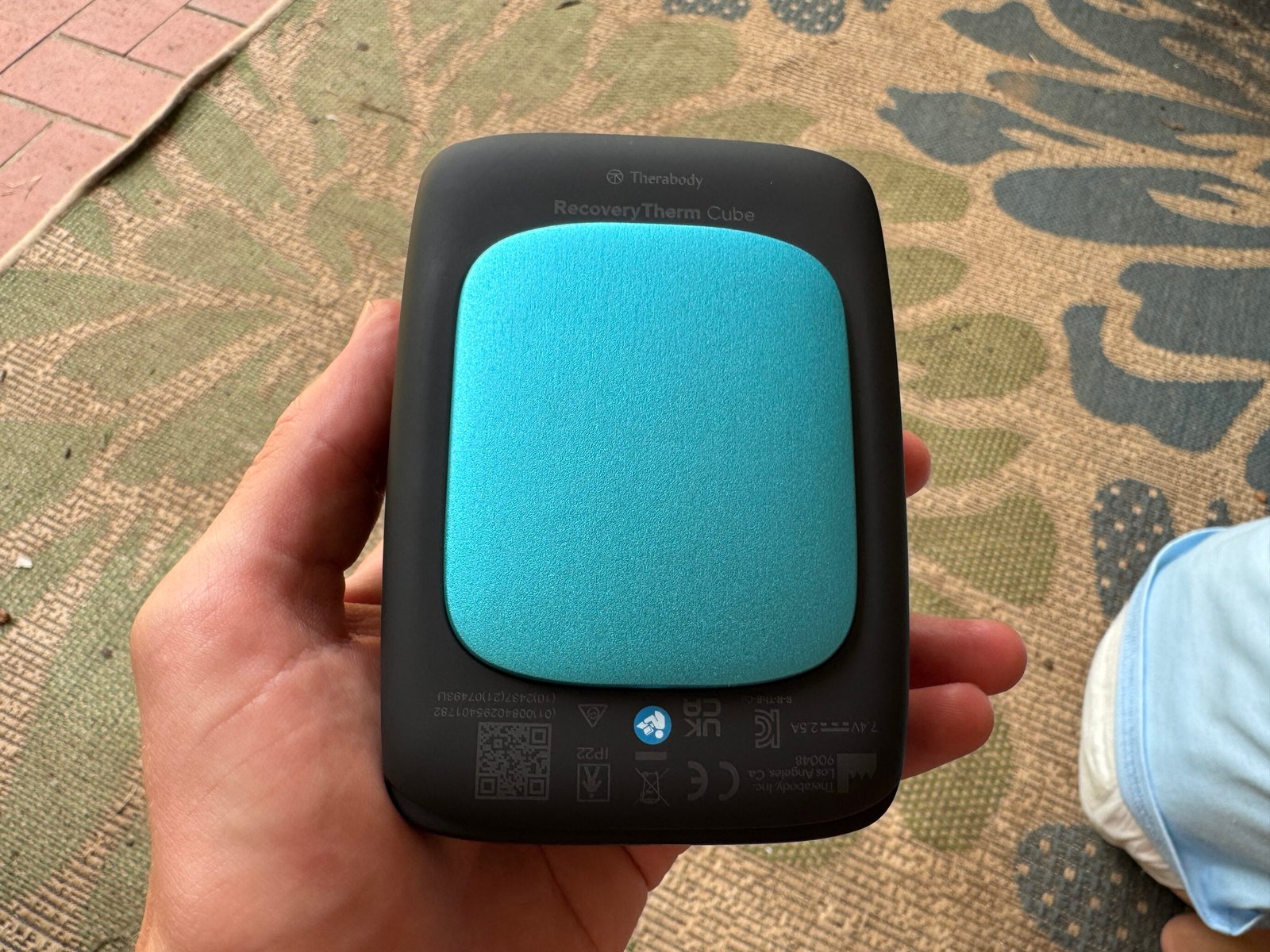
For general post-workout soreness spread across a large area, this device won’t make much of a dent.
The Price Is Hard to Justify
At $160 this is too expensive for what it offers. A $25 heating pad covers more surface area and handles heat therapy just as well for most situations.
A bag of ice or a standard ice pack handles cold therapy for almost nothing. This device doesn’t sweat like ice packs but ice packs are still cheaper, have more coverage, and contour to any area.
The one edge this device has over both alternatives is the automatic contrast cycle with consistent, preset temperatures. That’s almost impossible to replicate by yourself.
Comparing to Alternatives
There’s no perfect alternative, but for most people, simpler tools are better:
Heating Pad
A standard heating pad covers more surface area and costs way less. This heating pad on Amazon runs around $25-30 and works well for back, shoulder, or leg pain. For heat therapy alone, it’s better.
Joint Ice Pack
If you need to treat curved areas like a knee or elbow, a contoured ice pack built for joints is a better option. This joint ice pack on Amazon conforms to joints. It will sweat, but it costs only $25ish.
Both Together
For the price of the RecoveryTherm Cube, you could buy a quality heating pad and several ice packs and still have money left over. The tradeoff is that you lose the automatic cycle, the consistent preset temperatures, and the convenience of one device.
Where to Buy and Warranty
The RecoveryTherm Cube is available on Therabody’s website and on Amazon. It comes with a one-year warranty.
Who should buy this:
- People with a specific, recurring injury in a flat muscle area like the lower back, calf, quad, bicep, or tricep
- Anyone who wants the convenience of contrast therapy without dealing with ice or water
- Physical therapy clinics or massage studios treating isolated muscle injuries
Who should NOT buy this:
- People trying to speed up recovery from general workout soreness
- Anyone who needs to treat joints like knees, elbows, or ankles
Conclusion
The contrast cycle is effective, sessions only take 15 minutes, the battery lasts long enough for daily use, and not having to deal with a sweating ice pack is nice when I’m scrolling in bed or cooking breakfast.
I wouldn’t buy it again knowing what I know now. The flat surface and small coverage area are not worth the price. A heating pad and an ice pack cover 80% of the same ground for about $50 total.
Therabody makes great products and the build quality is premium-feeling, but this device feels more like an upsell than something most people will actually search for and regularly use. If it was a gift, you’d be glad to have it. At $160 out of pocket, it’s hard to recommend. Its actual value is closer to $75 in my opinion.
What are your thoughts? Leave any questions below!
FAQs
Medical Disclaimer
The information contained in this post is for informational and educational purposes only. It is not intended to provide medical advice or to take the place of such advice or treatment from a personal physician. All readers/viewers of this content are advised to consult their doctors or qualified health professionals regarding specific health questions or before embarking on any new health or wellness routine, including saunas and cold plunging. Neither the author(s) nor the publisher of this content take responsibility for possible health consequences of any person or persons reading or following the information in this educational content. All viewers of this content, especially those taking prescription or over-the-counter medications, should consult their physicians before beginning any cold plunging routine or other health or wellness program.