What Happened After 16 Weeks of Using the Kineon MOVE+
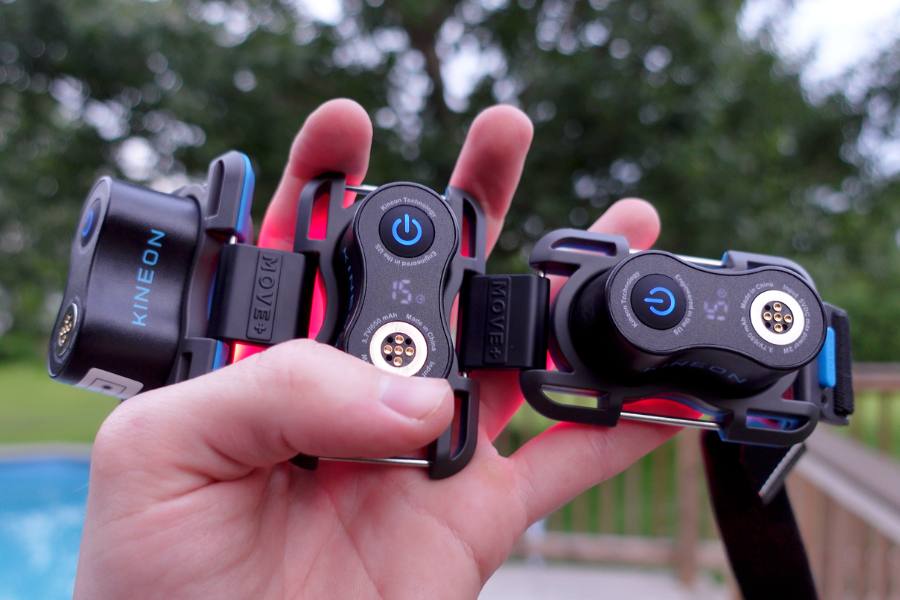
Want targeted red light therapy without a bulky panel taking up half your room? The Kineon Move+ is designed to solve that. It’s portable, wearable, and built specifically for joints and muscles.
In this review I’ll cover the pros and cons, who it’s best for, who should avoid it, and my personal experience using it across 16 weeks of training.
Prefer to watch instead? Click below to watch the review
In the Box
Everything you need comes in the package: three red light therapy modules, elastic adjustable straps, and a charging case.
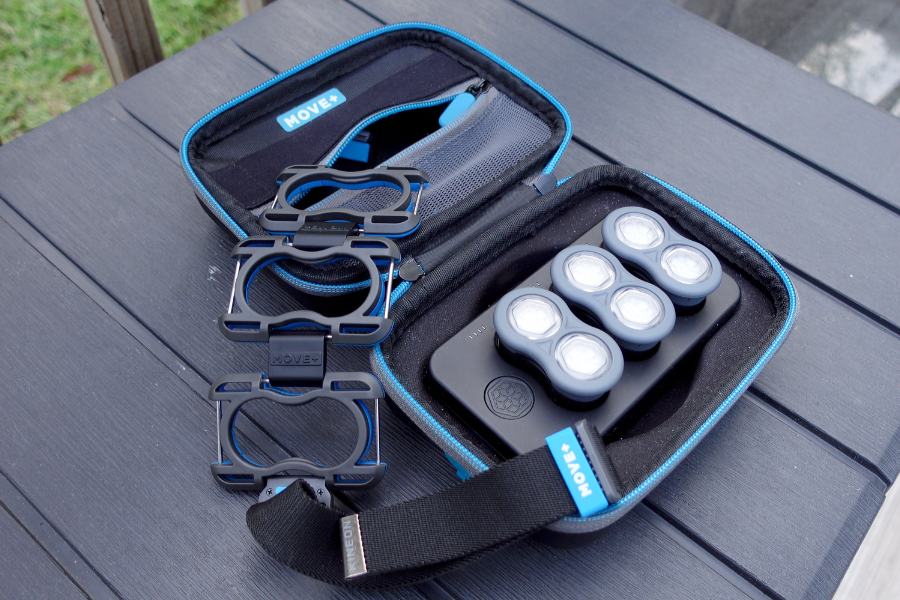
The only thing worth noting upfront is that the charging case is required to charge the individual lights. There’s no charging port on each module itself. It’s never been a problem for me, but it’s worth noting.
How it works
The Kineon Move+ uses two wavelengths — red light at 660nm and near-infrared at 880nm — both of which are absorbed by the mitochondria in your cells. The basic idea is that stimulating mitochondria boosts energy production and cellular repair, which in turn improves circulation and reduces inflammation in the targeted joint or tissue.
What sets it apart from a standard red light panel is the delivery method. Instead of bathing a broad surface area in light, the Move+ uses focused beam angles, medical-grade LEDs, and laser diodes to push light deeper into the joint or muscle rather than just hitting the surface.
That’s the core argument for why a small wearable device can compete with a much larger panel. It’s more about penetration depth than overall coverage.
Price and Where to Buy
The Kineon Move+ retails for $499. You can purchase it directly at kineon.io or on amazon.
At this price point it’s one of the more expensive recovery tools on the market, so whether it’s worth it depends a lot on what you’re dealing with.
Pros
Pain relief is real, it just takes time. I used the Move+ on my knees, elbows, shoulders, ankles, wrists, and biceps every other day for 16 weeks. The first two weeks felt like nothing and honestly I thought I’d wasted my money. Around weeks 2–3, consistent relief started showing up — especially in my knees, elbows, and biceps. Once it kicked in, it stayed.
Comfort across most areas is excellent. The adjustable elastic straps fit well on knees, elbows, ankles, and wrists. The modules are smooth rubber so they glide on without pulling hair. My skin felt lightly warm after sessions but never irritated.
One button. That’s it. A short press turns it on. A long press cycles through time intervals. All three lights sync with each other so just set one and the rest follow. Setup takes under 20 seconds.
The battery is surprisingly good. Most red light therapy devices require being plugged in the entire time. The Move+ runs on a single charge for about 4 days of use. If one module dies, the others usually still have charge left over.
Setup becomes second nature. After some initial trial and error figuring out strap configurations for each body part, getting it on takes about 20 seconds. Once you figure out your wrist setup and your ankle setup, it’s super easy.
You can wear it while doing other things. Most red light therapy devices require you to stand in front of a panel for the entire session. The Move+ straps on and stays put, so I’m able to walk around, work on my laptop, cook breakfast, brush my teeth – or any household tasks. For a device that works best with consistent daily use, being able to multitask during sessions makes a real difference.
Cons
It doesn’t work equally everywhere. I injured my hand while benching and used the Move+ on it every night — I didn’t notice much difference. I don’t know if it’s because of the type of tissue in my hand or the type of injury but either way it did not speed it up. On the flip side, pain relief was strong for knees, elbows, and biceps, but inconsistent in other areas. I’ve been working through ITBS on my left knee as I try to get back into running and I do think it’s helping my recovery.
Coverage per module is small. Each light covers a limited surface area. For bigger areas like the lower back or quads, you need to either move the device around, run all three simultaneously, or buy the extender strap. My main issue is my lower back, and without the extender strap it doesn’t have enough coverage to make it worth it.
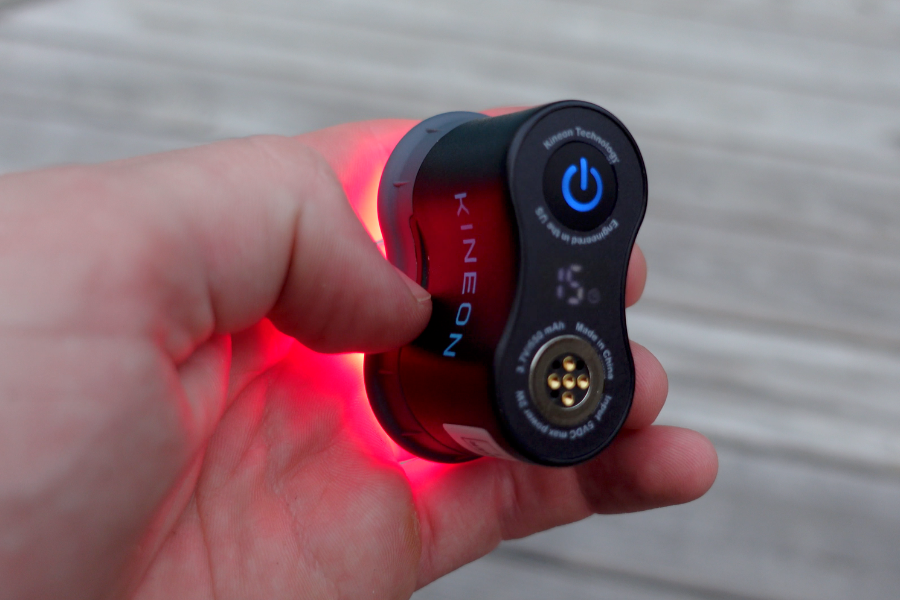
Shoulder and lower back fit is awkward. The straps work well for limbs but don’t wrap cleanly around the shoulder or lower back. For those areas I ended up holding one or two modules by hand instead of strapping them on. If you do wrap it around your torso using all three straps you’ll end up with awkward placement of lights. I tried this and ended up with only one of the three lights on the target area (my lower back) while the other two were on the sides of my abs.
The price is hard to justify for regular people. I can’t justify the $499 price tag unless you have CHRONIC joint and muscle pain or are trying to participate in the next olympics.
Setup
Getting the Move+ on for the first time takes a bit of trial and error. I had to figure out the right strap configuration for each body part but that was the main learning curve. Once I dialed in my configurations for each area, it took me less than 20 seconds to get it on and start a session.
Each module has one button. One short press to turn it on. One long press to cycle through the available session times (5, 10, and 15 minutes). They sync automatically, so you’re not setting each one individually.
Coverage
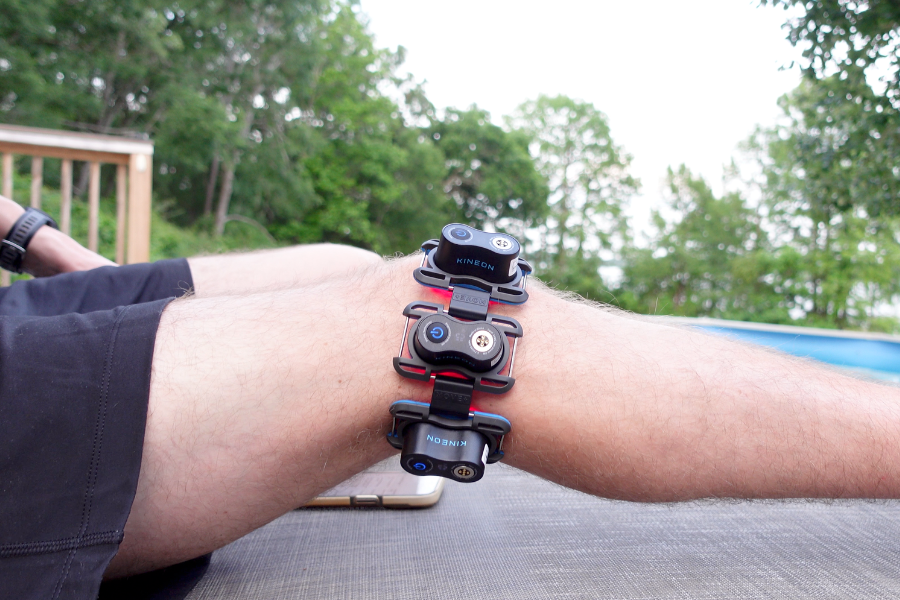
Coverage per light is small. For hinge joints like a knee or elbow, all three lights connected to each other via the small black clips works best. For large muscle groups like the lower back you’ll need to just lay the lights on the target area while laying on your stomach.
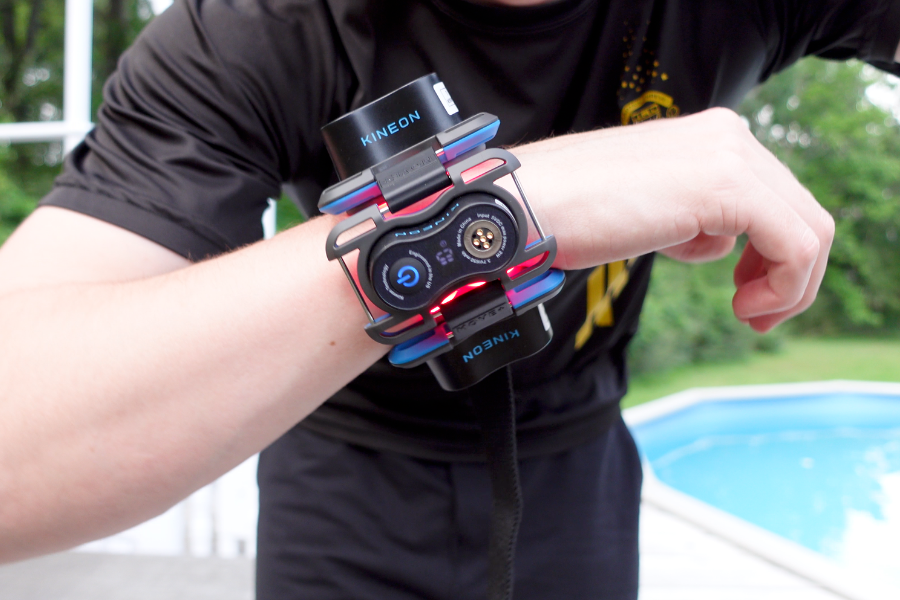
If your problem area is a joint other than your shoulder, this device works great. If your issue is a larger muscle group or the back it’s not great simply because of the lack of coverage.
Comfort
The smooth rubber housing slides on without snagging skin or hair. The elastic straps are adjustable enough to fit snugly on most limbs. My skin felt lightly warm after each session but only in the targeted area.
For the shoulder and lower back, the strap system doesn’t wrap naturally. It’s not a dealbreaker, but you’ll end up holding the modules by hand for those areas instead of having a hands-free session.
Ratings Breakdown
| Category | Score |
|---|---|
| Pain Relief | 4 / 5 |
| Comfort | 4.5 / 5 |
| Simplicity | 5 / 5 |
| Battery Life | 5 / 5 |
| Setup | 4 / 5 |
| Overall | 4.5 / 5 |
Overall Rating: 4.5 / 5
After 16 weeks, the Move+ works, but it’s not life-changing. It helped consistently in certain areas (knees, elbows, biceps), did little in others (hand injury), and overall it can improve recovery without being a complete solution or a replacement for rest and rehab.
The Verdict on Price
Here’s the honest truth: if I knew what I know now, I probably wouldn’t have bought it.
My main problem is my lower back and the Move+ simply doesn’t have enough coverage for that, unless you also buy the $55 extender strap (which completely fixes the small coverage issue on my back). It works well for joints — knees, elbows, ankles, wrists — and for those applications I think it genuinely earns its price for the right person.
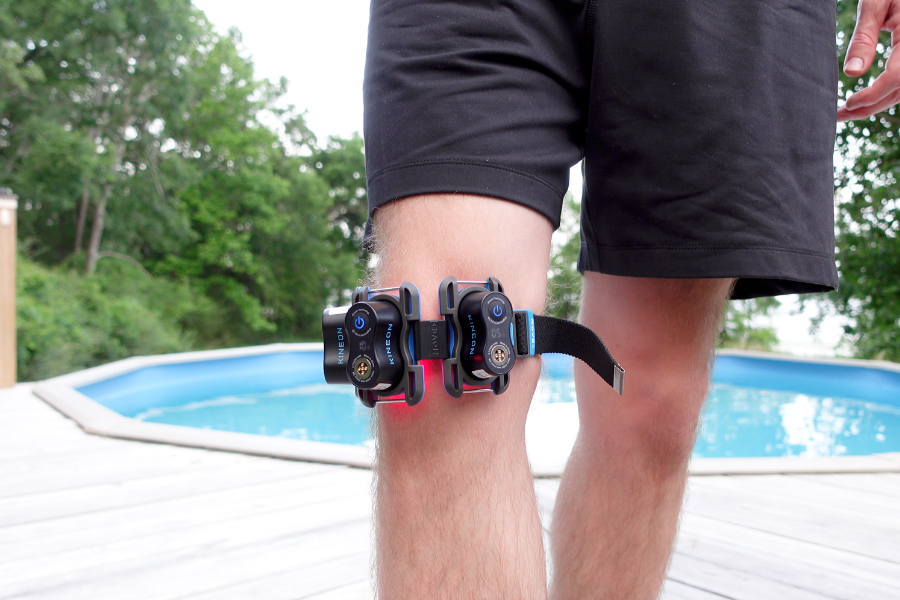
But at $499, there’s very little margin for disappointment. If your issue is in a joint and you’ve exhausted simpler recovery methods, the investment makes sense. If you’re buying it on the hope that it’ll fix a back problem or general soreness, it probably won’t do much.
If you do want to try it, use this link or enter ‘CARBY’ at checkout for 10% OFF!
Who It’s Best For
The Move+ is best for people dealing with chronic joint pain — knees, elbows, ankles, wrists — or athletes training at a high level who want every small recovery advantage they can get.
Who Should Skip It
If you’re dealing with occasional post-workout soreness or your primary issue is a larger area like the lower back or quads, I’d hold off. You’re probably better off with simpler recovery methods like getting more rest and icing the area.
Disclosure
Kineon didn’t pay me to say any of this. This is my honest opinion after 16 weeks of consistent use. If you decide to try it, this link gets you 10% off at no extra cost.
Conclusion
In my opinion, the Kineon Move+ is worth it, but only for the right person.
If you have chronic joint pain or you’re training seriously and want a recovery edge, the Kineon Move+ is worth it. The battery life is genuinely impressive, it’s dead simple to use, and the pain relief in joints like the knees and elbows is real. It just takes a few weeks to kick in, so don’t expect miracles in the first session.
It’s not perfect. The coverage per module is small, the shoulder and lower back fit is awkward (unless you have the extender strap), and $499 is a lot to spend on something that won’t fix every problem area. For the average person dealing with normal post-workout soreness, there are better ways to spend that money.
But if joint pain is your thing — and you’ve already tried the basics — this is one of the more practical, well-designed red light therapy tools on the market. Portable, simple, and effective where it counts.
Bottom line: chronic joint pain or serious training — worth it. General soreness — skip it.
Have any questions before buying? Let me know in the comments below!
FAQs
Medical Disclaimer
The information contained in this post is for informational and educational purposes only. It is not intended to provide medical advice or to take the place of such advice or treatment from a personal physician. All readers/viewers of this content are advised to consult their doctors or qualified health professionals regarding specific health questions or before embarking on any new health or wellness routine, including saunas and cold plunging. Neither the author(s) nor the publisher of this content take responsibility for possible health consequences of any person or persons reading or following the information in this educational content. All viewers of this content, especially those taking prescription or over-the-counter medications, should consult their physicians before beginning any cold plunging routine or other health or wellness program.